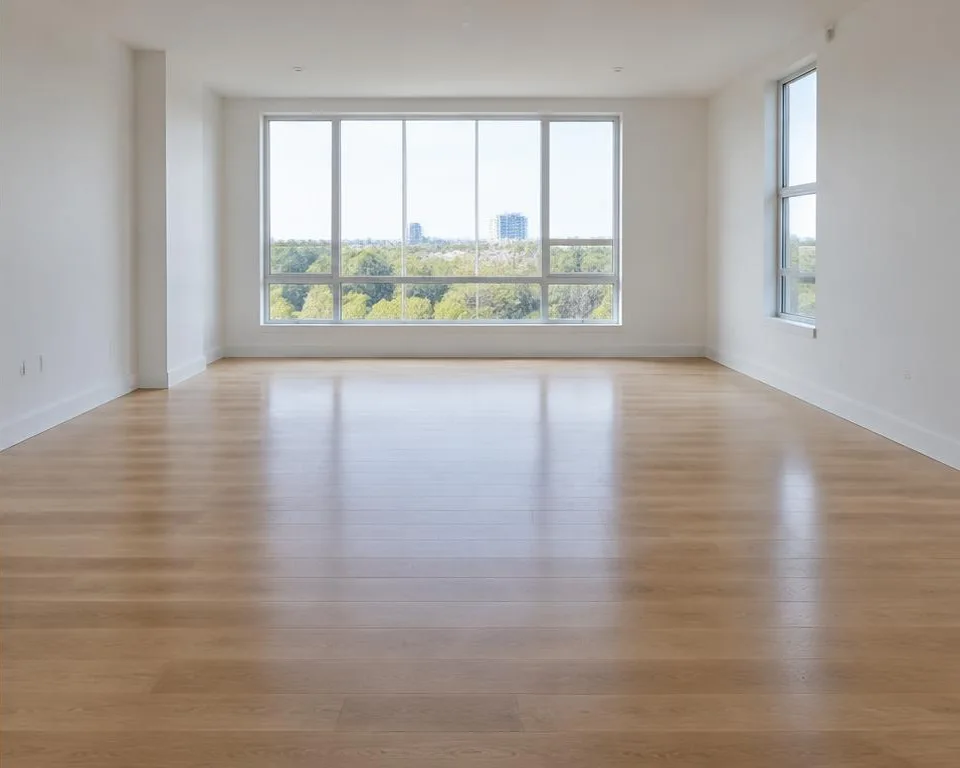
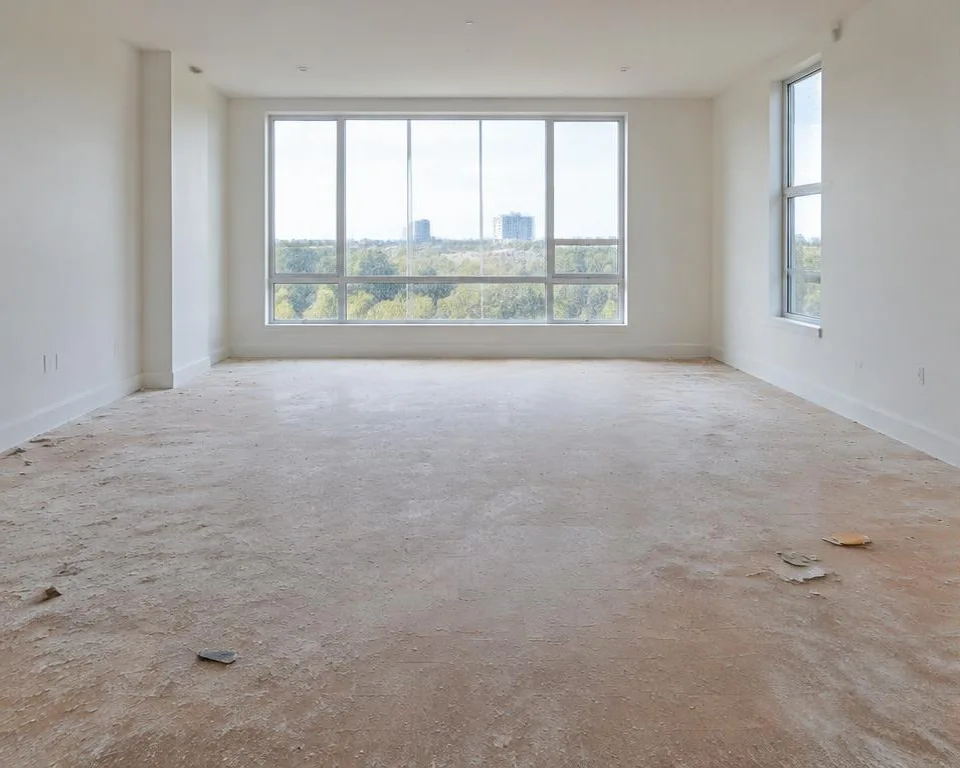
Post-Construction Cleaning — What It Costs, Why Drywall Dust Comes Back, and How Many Passes It Really Takes
A post-construction clean removes construction dust, paint and adhesive residue, protective film, labels and debris from a finished build or renovation. It is a multi-pass job, not a single clean: drywall dust is fine enough to stay airborne for hours and settles again after the first pass.
Hello Cleaners manages the whole job end to end — your booking, coordinating the vetted local team, the clean itself and after-service care backed by our 24-hour re-clean guarantee.
Expect $250–$400 for a small apartment, $300–$500 for one to two bedrooms, $400–$650 for three bedrooms and $600–$900+ for a large home. A two-bedroom final clean is usually a full day for two cleaners.
Who this is for
Homeowners after a renovation
The trades have left, the property looks finished and every horizontal surface is gray. What you need is the difference between a site that has been swept and a home you can unpack into — that is film removal, adhesive residue, paint flecks on glass and dust out of every track and vent, not mopping.
General contractors and builders at handover
The clean is the last item before sign-off and it is the one the client judges everything else by. What matters is scheduling around the snag list, one crew for the whole property, and a final pass timed after the last trade has genuinely finished rather than when the program said they would.
Developers and agents preparing a unit to sell or let
Photography, viewings and handover all need the same thing: glass with no film on it, floors with no grit under foot, and no dust on the sills in the listing photos. On multiple units, repeatability across a floor matters more than any single clean.
What it costs
These bands are copied from our published price page. Your exact price is confirmed in a free quote before anything is booked.
What pushes the price to the top of the band
- Drywall work. Sanded drywall is the single biggest cost driver in this category. The dust is finer than household dust, it travels through the whole property, and it needs vacuuming with filtration before any wet work — wet a dusty surface first and you have made a paste.
- Paint, adhesive and silicone residue. Overspray on glass, caulk smears on tiles and tape residue on frames are removed by hand, sometimes with a blade at an angle on glass. This is slow, skilled work and it is what separates a real post-construction clean from a general clean.
- Protective film and labels. Windows, appliances, countertops and bathroom fixtures all arrive filmed and labelled. Film left in sunlight for weeks bonds to the surface and takes far longer to remove than film taken off on schedule.
- Debris still on site. Offcuts, packaging and site trash are a clearance, not a clean. Skips and disposal are the builder's scope, not ours.
- Trades still working. If a final clean happens while anyone is still cutting, sanding or painting, it will need doing again — and that is a second charge, not a warranty claim.
A property that is genuinely finished and empty, trash removed by the trades, power and water connected, and lifts or parking available for equipment. Booking rough and final passes together with one provider is materially cheaper than treating them as two unrelated jobs.
How long it takes
| Property | Final clean, two cleaners | Full rough + final |
|---|---|---|
| Small apartment | 4–6 hours | 1–1.5 days |
| 1–2 bedroom | 6–8 hours | 1.5–2 days |
| 3 bedroom | 1–1.5 days | 2–3 days |
| Large home | 1.5–2.5 days | 3–4 days |
These are working days for a two-person crew. The touch-up pass, done after the dust that was airborne during the final pass has settled, is typically two to three hours and is the pass most schedules forget to allow for.
What's included
- Rough pass: removal of loose debris left after the trades, sweep and filtered vacuum of all floors, wipe-down of large horizontal surfaces so the property is workable.
- Final pass: ceilings, walls and high-level dusting, light fixtures, vents and extract grilles, doors, frames and hardware, baseboards, switches and sockets.
- Full glass detail: interior glass, frames, sills and tracks, plus film, label adhesive and paint fleck removal from panes.
- Kitchen: inside and outside all cabinetry, countertops, backsplashes, sink and faucets, appliance exteriors and interiors, film and labels removed.
- Bathrooms: bathroom fixtures, tiles and grout haze, glass screens, chrome polished dry, silicone lines cleaned of smears.
- Floors: appropriate method per material — grout haze on tile, grit removed before any pad touches timber, filtered vacuum on carpet.
- Touch-up pass: a return visit after settlement to clear the dust that dropped out of the air during the final pass, which is what makes the property stay clean.
What's not included, unless you ask
- Waste removal and skips. Offcuts, packaging and construction waste are the contractor's scope. We remove what a clean produces, not what a build produced.
- Snagging and repairs. Chips, scratches, misaligned doors and unfinished silicone are for the trades. We report them with photographs so they reach the snag list.
- Exterior facades, gutters and roofs. Ground-level hard surfaces can be added as pressure washing from $150; anything at height is not our scope.
- Hazardous material. Asbestos, lead paint, chemical spills and sharps handling need licensed specialists.
- Sealing and finishing. Grout sealing, timber oiling and stone sealing are trade finishes, not cleaning.
- Cleaning around active work. We will do it if asked, but it is scoped and charged as a separate pass, because it will need repeating.
What happens on the day
Site walk and protection (0:00)
Walk the property with your snag list, note anything already damaged, and protect finished surfaces — new timber, stone and bathroom fixtures scratch easily and construction grit is abrasive.
Dry debris and filtered vacuum (0:20)
Everything dry comes off first: loose debris, then a filtered vacuum from ceiling level downwards across every surface, including inside cabinetry and tracks. No water touches anything until the dust is off.
Film, labels and residue (1:30)
Protective film, adhesive, paint flecks and caulk smears removed by hand, glass last so it is not re-contaminated by work above it.
Wet clean, high to low (3:00)
Walls where the finish allows, doors, frames, baseboards, switches, radiators, then kitchen and bathrooms in full.
Glass and floors (5:00)
Interior glass, frames, sills and tracks finished dry, then floors by material — grit lifted before any pad, grout haze removed from tile, timber cleaned with the minimum water it tolerates.
Settlement and touch-up (next visit)
Airborne dust disturbed during the final pass settles over the following hours. The touch-up pass clears it, and it is why a one-pass post-construction clean always looks dusty again the next morning.
When to book
- Book the final clean after the last trade, not after the program says the last trade. Cleaning a property that still has a painter in it is money spent twice.
- Allow for three passes in the program: rough while work is finishing, final at completion, touch-up before handover, photography or move-in.
- Give a week's notice for anything above a two-bedroom. These jobs need a crew and equipment, not a single cleaner, and they book out around month-end completions.
- Get protective film off on schedule. Film baked on by weeks of sun costs more to remove than the rest of the glass work combined.
- Schedule photography after the touch-up pass, never between the final and the touch-up. Camera flash finds every dust film on a dark countertop.
The details most people learn the hard way
- Drywall dust is not household dust. It is fine, alkaline and it keeps moving. Anyone who mops it first has made a slurry that dries back into a haze — dry filtered vacuum always comes before water.
- Vents and extract grilles hold dust for months. Miss them and the HVAC redistributes construction dust across a clean property every time it runs.
- Grout haze is not dirt. It is a cementitious film that needs the right product, not more scrubbing. On the wrong tile the wrong product etches, so it is tested in a corner first.
- New timber and stone scratch under construction grit. Every pad and cloth has to be clean, and floors are lifted of grit before anything is dragged across them.
- A blade on glass is a technique, not a shortcut. Used at the wrong angle on toughened or coated glass it leaves permanent scoring, which is why coated panes get chemical removal instead.
- Silicone smears show up when the light changes. They are invisible at midday and obvious at dusk, so bathrooms and kitchens are checked with a flashlight held flat to the surface.
- Paint flecks on floors survive mopping. They need lifting individually, and on vinyl and laminate they need lifting without solvent.
- Budget the touch-up pass at the start. Clients who do not are the ones who believe the clean failed, when in fact the dust was still in the air when the crew left.
What customers say
They did an amazing job cleaning the entire home post construction and renovation. Absolutely would have them come clean again. We are very happy with the result!!! Thank you!
We hired Hello Cleaners for a…
We hired Hello Cleaners for a post-renovation cleanup and they did an unbelievable job removing thick drywall dust from every single corner. The cleaners were polite, professional, and left the space looking immaculate.
The team did an amazing job
The team did an amazing job. Super clean and they got tough post-construction mess out of my place, including duct tape residue. And they were very communicative. Excellent experience.
Frequently asked questions
How much does post-construction cleaning cost?
$250–$400 for a small apartment, $300–$500 for one to two bedrooms, $400–$650 for three bedrooms and $600–$900+ for a large home, depending on how much drywall dust, residue and film there is.
How long does a post-construction clean take?
A final clean runs from four to six hours for a small apartment up to two and a half days for a large home with a two-person crew. A full rough-plus-final sequence is one and a half to four days.
Why is my property still dusty after the clean?
Because drywall dust that was airborne during the clean settles afterwards. That is normal and it is what the touch-up pass exists for. A property that has had one pass and no return visit will always show a film the next morning.
What is the difference between rough, final and touch-up cleaning?
Rough removes debris and bulk dust while trades are finishing. Final is the detailed clean at completion — film, residue, glass, cabinetry, floors. Touch-up clears the settlement afterwards, immediately before handover or photography.
Do you remove construction debris and trash?
No. Skips and construction waste are the contractor's scope. We remove what the cleaning process generates.
Can you clean while trades are still working?
Yes, as a scoped separate pass. It will need repeating once the work is genuinely finished, so it is a convenience, not a substitute for a final clean.
Do you do new-build handovers as well as renovations?
Yes. New builds are usually film, label and haze work; renovations are usually dust and residue in a property that also has older finishes to protect.
Is this the same as a deep clean?
No. A deep clean tackles accumulated household soil. Post-construction work is about dust, adhesive, film and haze, needs filtration and hand residue removal, and is priced separately.
Do you clean carpets after construction?
Vacuuming with filtration is included. Hot-water extraction is an add-on at $45–$120 a room and is worth it where carpet was down while sanding happened.
Do you supply your own equipment?
Yes, including filtered vacuums. We need power and water on site.
How far in advance should I book?
A week for anything above a two-bedroom, more around month-end completion dates.
Coverage
Post-construction cleaning is available in the states we currently serve. Coverage status is shown per area on the locations directory — we do not list an area we cannot staff.
Rough, final and touch-up: the three post construction cleaning passes
Builders' cleaning is sold in passes, and quotes that look wildly different are usually quoting different passes. Here is what each one covers.
| Pass | When it happens | What the construction cleaning crew does |
|---|---|---|
| Rough clean | After framing, drywall and rough-in, before finishes | Bulk debris removal, offcuts and packaging out, sweep down, wet-wipe of surfaces that trades still have to work on. Keeps the site safe and lets finishing trades start clean. |
| Final clean | After finishes, before handover | Protective film and label removal, cabinet and drawer interiors, appliance interiors, window glass and tracks, light fixtures, vents, paint and adhesive spots, floors detailed to the finish type. |
| Touch-up clean | 24–72 hours after the final, before move-in or a showing | The pass that catches settled drywall dust. Horizontal surfaces, floors, glass and vents again. Small, quick, and the one most people skip and then regret. |
New build vs renovation cleaning
A new construction cleaning is a whole empty structure: more square footage, more film and labels, more glass, but no furniture and no occupied rooms to protect. A renovation cleaning is smaller in area and harder per square foot — dust has travelled into rooms nobody worked in, existing furniture and finishes need protecting, and containment failures show up two rooms away. Renovation work also runs later in the day because trades are usually still finishing as the crew arrives.
Post construction cleaning checklist
- Debris, offcuts, packaging and protective floor covering removed from site
- Protective film peeled from windows, appliances, countertops and bathroom fixtures; adhesive residue solvent-treated
- Manufacturer labels and stickers off glass, appliances and fixtures
- Drywall dust vacuumed from walls, ceilings, trim, door tops and HVAC vent faces with a HEPA filter
- Cabinets, wardrobes and drawers cleaned inside and out; shelves wiped
- Appliance interiors: oven, refrigerator, dishwasher, microwave, washer drum and seals
- Windows in and out where reachable, plus frames, tracks and sills
- Paint spots, grout haze, silicone smears and adhesive removed from glass, tile and floors
- Bathrooms and kitchens sanitized after dust removal, not before
- Floors cleaned to the finish: sealed hardwood damp-mopped, tile scrubbed, carpet vacuumed twice in opposing directions
- Light fixtures, switch plates, sockets and door hardware wiped
- Final walk-through with a snag list before sign-off
Working to a handover date? Read the room-by-room handover checklist, or if the property is going straight to market, see pre-sale cleaning. Contractors staffing repeat site work can price it through cleaning contracts. Venue and marquee builds are handled on event cleaning instead.