Deep Cleaning — What It Costs, What Gets Touched That a Regular Clean Never Does, and How Long It Really Takes
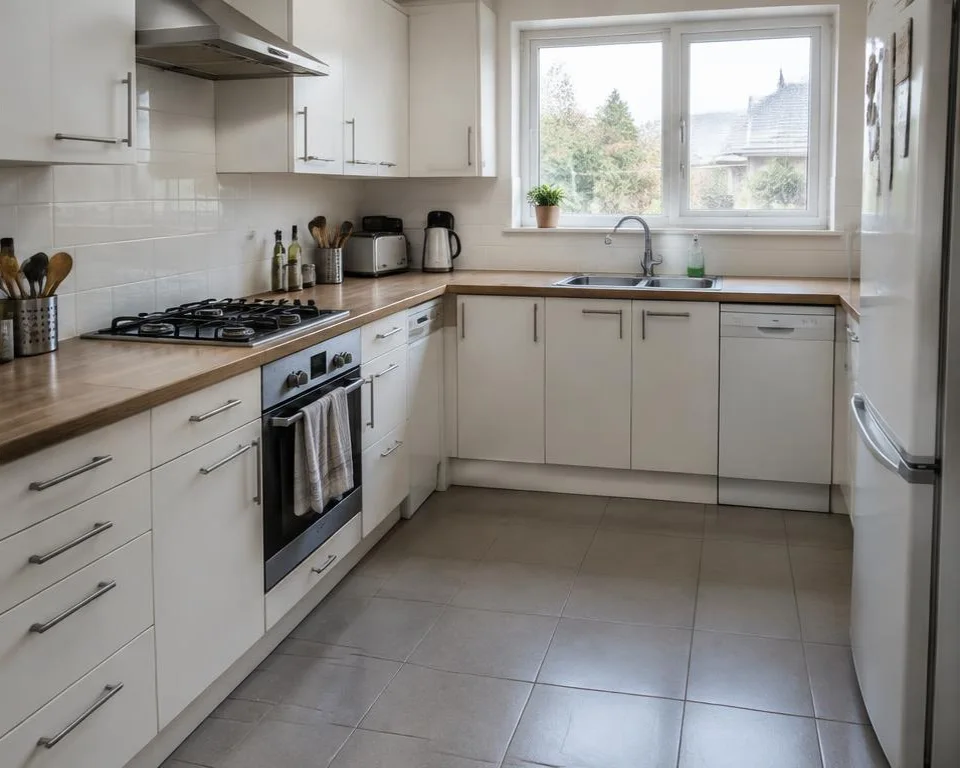
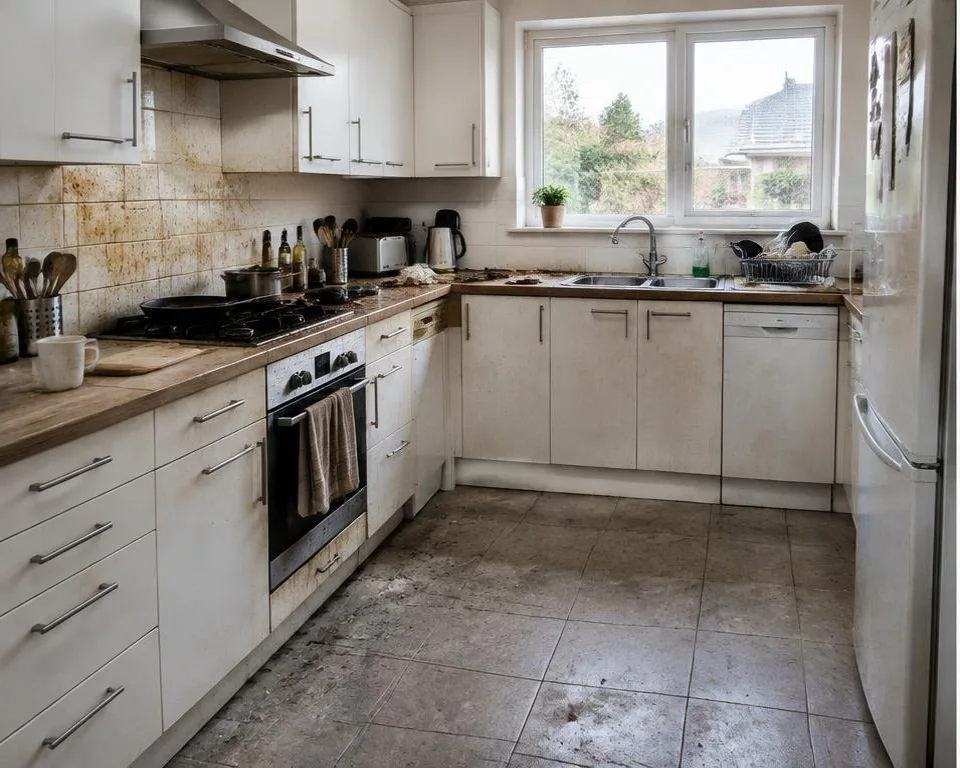
A deep clean is a one-off reset that works through the parts of a home a routine clean never reaches — inside the oven and the fridge, behind and under moveable appliances, range hood filters, grout and seals, baseboards, door frames, switch plates, window tracks, radiator fins, light fixtures and the tops of cabinets and doors. A regular clean maintains a standard; a deep clean re-establishes one.
Hello Cleaners manages the whole job end to end — your booking, coordinating the vetted local team, the clean itself and after-service care backed by our 24-hour re-clean guarantee.
Expect $160–$220 for a studio, $180–$260 for one bedroom, $220–$330 for two, $280–$420 for three, $350–$550 for four and $450–$700 for five bedrooms. A two-bedroom home takes roughly four to six hours with one cleaner, or two and a half to three with a pair — two to three times as long as the regular clean of the same property.
Who this is for
Homes that have not had one in a year or more
Nothing looks dirty, but the kitchen has a film that wiping no longer removes, the shower screen has gone cloudy, and the range hood above the stovetop is heavy with grease. That is accumulated soil rather than surface mess, and it needs dwell time, agitation and disassembly — not more frequent wiping.
Before a recurring schedule starts
A routine clean is designed to hold a standard, not create one. Starting a weekly or biweekly plan on top of a year of build-up means every visit spends its hours on backlog. A single deep clean up front resets the baseline, after which a regular clean keeps it there for a fraction of the time.
Seasonal resets, new arrivals and post-illness homes
Spring resets, a new baby, an allergy diagnosis, a household that has just had a winter of flu, or a home about to be photographed — these are all cases where the priority is the parts of the house that never normally get touched: mattresses, upholstery, vents, filters, blinds and the dust reservoirs behind furniture.
What it costs
These bands are copied from our published price page. Your exact price is confirmed in a free quote before anything is booked.
What pushes the price to the top of the band
- Time since the last deep clean. This is the single biggest driver. Grease, hard-water scale and grout soil are all dwell-time problems — a year of build-up is not twice the work of six months, it is closer to three times, because the soil has bonded rather than settled.
- Kitchen condition. A stovetop with carbonised residue, an oven door with baked-on deposits between the glass panes, and a saturated range hood filter are the three jobs that most often push a quote to the top of its band. The oven alone can absorb an hour and a half.
- Hard water. Hard-water scale on screens, taps, tiles and shower seals needs an acidic product and real dwell time, repeated. In hard-water regions this reliably adds time to every bathroom in the property.
- Clutter and surface density. A deep clean is measured in surfaces, not square feet. A four-bedroom home with clear counters can take less time than a two-bedroom flat with full shelves, because every object has to be lifted, cleaned under and replaced.
- Pets and soft furnishings. Hair works into carpet pile, upholstery and mattress seams and does not vacuum out; extraction is priced separately at $45–$120 a room.
- Access and height. High ceilings, mezzanines, stairwell light fixtures and windows that need reaching mean pole work or ladders, which is slower and needs two people for anything above head height.
An empty or near-empty property, clear counters and floors, a home that has had a deep clean within the last twelve months, and a scope you have narrowed deliberately — kitchen and bathrooms only, for example — all bring the quote toward the bottom of the band. Recurring plans attract 15% off weekly and 10% off monthly, so if a deep clean is the start of a schedule rather than a one-off, the ongoing cost falls immediately after it.
How long it takes
| Home size | One cleaner | Two cleaners |
|---|---|---|
| Studio | 3–4 hours | 1.5–2 hours |
| 1 bedroom | 3.5–5 hours | 2–2.5 hours |
| 2 bedrooms | 4–6 hours | 2.5–3 hours |
| 3 bedrooms | 6–8 hours | 3–4 hours |
| 4 bedrooms | 8–10 hours | 4–5 hours |
| 5 bedrooms | 10–13 hours | 5–6.5 hours |
These are working hours on site, not a promise of a finish time. Two cleaners are not exactly twice as fast as one — they share access to the same kitchen and bathrooms and lose time coordinating — but for anything with three bedrooms or more, a pair is the practical choice because a single cleaner runs past a normal working day. Where a home has not been deep cleaned in several years, the honest answer is sometimes that it needs two visits rather than one very long one.
What's included
- Kitchen: inside the oven including the door glass where it separates, the stovetop and its rings, the range hood hood and its filter, inside and on top of the fridge, inside the microwave, behind and under moveable appliances, inside and on top of every cabinet, backsplashes, sink and drain, and the bin area.
- Bathrooms: descaling of screens, tiles, grout, taps and shower heads, seals and silicone lines, behind and around the toilet including the base and the cistern, range hood vent covers, mirrors and cabinet interiors.
- Every room: baseboards, door frames and door tops, switch plates and sockets, radiators and their fins, window interiors, sills and tracks, blinds where the slats allow, light fixtures and shades, picture rails and the tops of wardrobes and cabinets.
- Floors: vacuuming including edges and under moveable furniture, mopping hard floors with attention to corners and thresholds, and spot treatment of marks.
- Soft furnishings: vacuuming of upholstery and mattress surfaces, cushions lifted and cleaned beneath.
- Dust reservoirs: the tops of doors, curtain rails, vents, range hood grilles, behind radiators and behind and under the furniture that can be moved by two people safely.
What's not included, unless you ask
- Carpet and upholstery extraction. Vacuuming is included; hot-water extraction is a separate service at $45–$120 a room because it uses different equipment and the fabric needs drying time.
- Exterior windows above ground floor. Interiors, sills and tracks are included. Anything requiring access equipment is a separate job.
- Clearance and disposal. We clean; we do not remove furniture, general waste or the contents of a property. Where volume is the actual problem, that is hoarding cleanup, which is a different service with a different method.
- Post-building dust. If a room has just been worked on, fine plaster and cut dust settles repeatedly for days and needs a staged method. That is a post-construction clean.
- Mold remediation. Surface mold on sealant and grout is treated. Anything growing through a wall, behind a substrate or driven by a moisture fault needs the cause fixed first — cleaning it is cosmetic and it returns.
- Pressure washing, gutters and outdoor areas. Separate services with separate equipment.
- Restoration disguised as cleaning. Etched glass, worn enamel, dulled stone, scorched countertops and stained grout that has lost its surface will not come back with any product. We will say so rather than charge hours against a stain that has become part of the material.
What happens on the day
Walk-through and priorities, 10–15 minutes
We walk the property with you, agree what matters most, flag anything we think is restoration rather than cleaning, and confirm which furniture may be moved. If your priority is the kitchen and bathrooms, we say so now and weight the day accordingly.
Chemicals down first
Oven, stovetop, range hood filter, shower screens, grout and toilet get their products applied at the start so they can dwell while other work happens. This is the difference between a deep clean and a long regular clean — almost every hard job on the list is chemistry plus time, not effort.
Top-down, dry work before wet
Light fixtures, cabinet tops, door tops, curtain rails, picture rails and vents, then walls and switch plates, then baseboards. Dust falls; cleaning floors before dusting means cleaning floors twice.
Kitchen detail
Return to the soaking oven and stovetop and agitate, strip and degrease the range hood filter, empty and clean the fridge interior, move the moveable appliances and clean behind and under them, then cabinet interiors and fronts, backsplash, sink and drain.
Bathroom detail
Agitate and rinse descaler on screens, tiles and taps, work the grout and the silicone lines, clean behind and around the toilet including the base, clear and wipe the range hood vent cover, then mirrors and cabinet interiors.
Rooms and soft furnishings
Surfaces lifted and cleaned under, upholstery and mattress tops vacuumed, cushions lifted, window interiors, sills and tracks, then blinds.
Floors last, working out of the property
Vacuum edges and under moveable furniture, then mop hard floors ending at the exit so nothing is walked back over.
Final walk-through
We go back through with you against the priorities agreed at the start. Anything missed is put right then, while the equipment and products are still on site.
When to book
- Allow a full day for three bedrooms and up. A deep clean cannot be compressed into a two-hour window, and the most common source of disappointment is a booking sized like a regular clean.
- Book before a recurring plan, not after. Starting a schedule on an un-reset home means paying maintenance rates for catch-up work, and the backlog is never quite cleared.
- Book before the tradespeople leave, not after you move in. If building work is finishing, sequence the deep clean after the final dust-producing task — and if that task was sanding, cutting or plastering, the job you actually need is a post-construction clean first.
- Spring and pre-holiday weeks are the busiest. March to May and the two weeks before major holidays are when deep-clean demand concentrates. Lead times stretch; book one to two weeks out in those windows.
- Do not book the same day as a move or a handover. Deep cleans overrun for legitimate reasons — an oven can take three times its estimate. Leave a day of slack between the clean and anything with a fixed time.
- Empty the fridge and the oven beforehand. Cleaning around food is slower and worse, and it is the one piece of preparation that reliably saves you money.
The details most people learn the hard way
- The oven is the job that decides the day. An oven cleaned within the last year takes twenty minutes. An oven that has never been cleaned takes ninety, and the deposits between the door glass panes cannot be reached at all on many models without separating the door — which is a specialist oven clean, not a deep-clean task.
- Range hood filters are usually the dirtiest object in the house. A metal mesh filter can be degreased and reused; a paper or charcoal filter cannot be cleaned and should be replaced. Knowing which you have costs nothing and changes what the kitchen smells like.
- Hard-water scale is dissolved, never scrubbed. Abrasive work on a shower screen removes the scale and the surface with it, which is exactly why some screens look permanently cloudy after a previous clean. Acid and patience are the only method; if the glass is already etched, no product will restore it.
- Grout has a point of no return. Discolored grout cleans up; grout that has lost its surface or grown mold into the body of the joint needs raking out and replacing. Any promise to restore it with a spray is a promise about a stain, not the material.
- Dust settles for hours after you leave. A room disturbed in the morning is still dropping fines in the afternoon, which is why top-down order matters and why a room that looked finished can need a final pass.
- Moving appliances is a two-person, planned task. Fridges and washing machines have water lines, feet that catch and floors that scratch. A single cleaner working alone should not be dragging them out, and if the plumbing looks aged we will leave it and tell you rather than find out the hard way.
- Bathroom sealant is a wear item. Black spotting inside the silicone rather than on it is growth in the body of the sealant. It gets treated to knock it back, but the fix is replacement — it is cheap, and it is not a cleaning failure.
- A deep clean does not fix a smell with a cause. Drains, washing-machine seals, fridge drip trays, bin housings and damp under sinks are the usual sources. We check them, because masking a smell for three days is worse than finding it.
- Two shorter visits sometimes beat one long one. In a home several years past its last deep clean, hour nine of a single visit is the least productive hour anyone will work. Splitting it produces a better result for the same money.
What customers say
Best Clean Ever
I had a deep clean done and I couldn't be happier. She was so thorough and did such a great job - I told her I have never seen bathrooms gleam like that! This is honestly the best house cleaning I've ever had. I am super impressed and will be using this company again.
The 3-team crew did an awesome deep cleaning service. They arrived on time and completed the job within the estimated time they gave me. Afterwards, they gave me a tour of the completed work to get my approval. Two thumbs up. I would definitely recommend HelloCleaners to a friend.
We booked a full deep cleaning before…
We booked a full deep cleaning before hosting family visiting from another state. The team worked methodically through every room, focusing on details like baseboards, tiles, and kitchen surfaces. The house looked spotless and smelled fresh the moment they finished.
Frequently asked questions
How much does a deep clean cost?
$160–$220 for a studio, $180–$260 for one bedroom, $220–$330 for two, $280–$420 for three, $350–$550 for four and $450–$700 for five bedrooms. The exact figure is confirmed in a free quote before anything is booked.
How long does a deep clean take?
Roughly three to four hours for a studio and four to six for a two-bedroom home with one cleaner; three to four hours for a three-bedroom with two cleaners. Homes that have not had a deep clean in several years take longer, and are sometimes better split across two visits.
What is the difference between a deep clean and a regular clean?
A regular clean maintains a standard: surfaces, floors, bathrooms and kitchen fronts. A deep clean re-establishes one: inside the oven and fridge, behind appliances, range hood filters, grout and seals, baseboards, door tops, switch plates, tracks, radiator fins and light fixtures. It takes two to three times as long on the same property.
What is included in a deep clean?
Kitchen interiors including oven, stovetop, range hood filter and fridge; bathroom descaling including grout, seals and behind the toilet; baseboards, door frames and tops, switch plates, radiators, window interiors, sills and tracks, blinds, light fixtures and cabinet tops; floors vacuumed to the edges and under moveable furniture; and upholstery and mattress surfaces vacuumed.
Is carpet cleaning included in a deep clean?
Vacuuming is. Hot-water extraction is separate at $45–$120 a room, because it needs different equipment and the carpet needs drying time afterwards.
Do I need to be home during a deep clean?
No. Most people are there for the ten-minute walk-through at the start and the walk-through at the end, and out for the middle. If you cannot be there at all, agree access and priorities in advance so the day is not spent guessing what matters.
How often should a home be deep cleaned?
Once or twice a year for most households on a regular cleaning schedule. Homes with pets, hard water, smokers, or no routine cleaning between times benefit from twice a year, because every one of those is a build-up problem rather than a mess problem.
Do you bring your own products and equipment?
Yes, including the descalers, degreasers and machines the job needs. If you want specific products used — a sealed stone floor, an allergy in the house, a finish you know is delicate — tell us at the walk-through and we will use yours.
Can you deep clean an empty property?
Yes, and it is faster and cheaper because nothing has to be lifted or worked around. If the property is empty because a lease is ending, a move-out clean is the same work aimed at an inspection checklist.
Will a deep clean remove mold?
Surface mold on grout, sealant and painted surfaces is treated. Mold driven by a moisture fault or growing behind a substrate comes back within weeks unless the cause is fixed, and we will tell you that rather than clean it twice.
Can you deep clean just the kitchen and bathrooms?
Yes. Those two rooms hold most of the work and most of the visible result, and narrowing the scope deliberately is a legitimate way to keep the quote at the bottom of the band.
How soon can you come?
Availability varies by area and by season — March to May and the run-up to major holidays are the busiest windows. Send the property size and ZIP code through the free quote form and you will get the current lead time for your area rather than a generic answer.
Coverage
Deep cleaning is available in the states we currently staff, and each area page shows its own live status rather than a national claim. Coverage status is shown per area on the locations directory — we do not list an area we cannot staff.